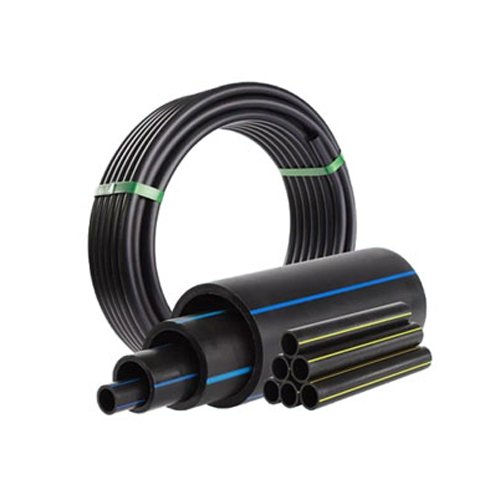
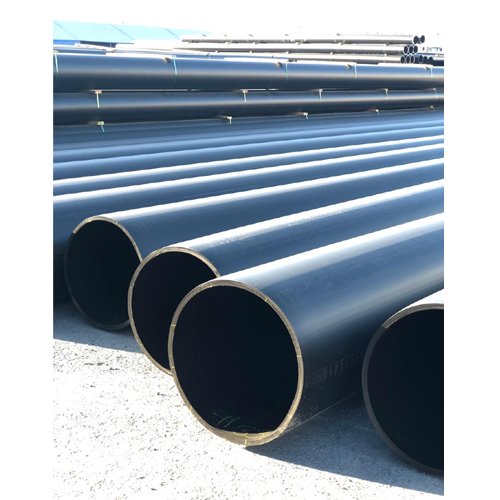
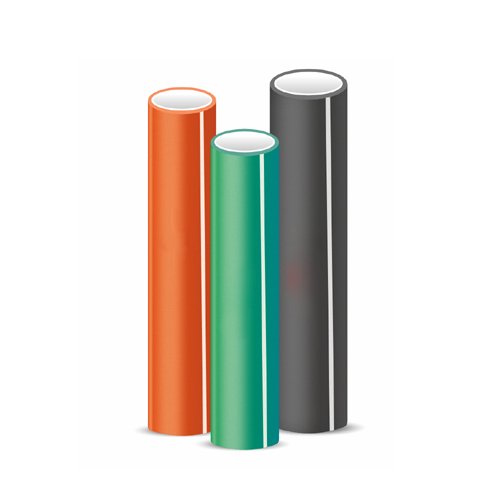
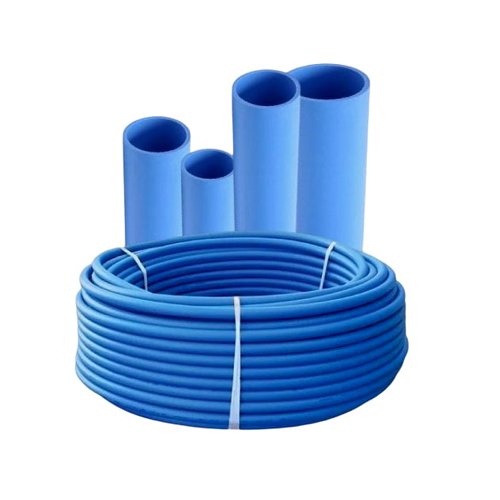
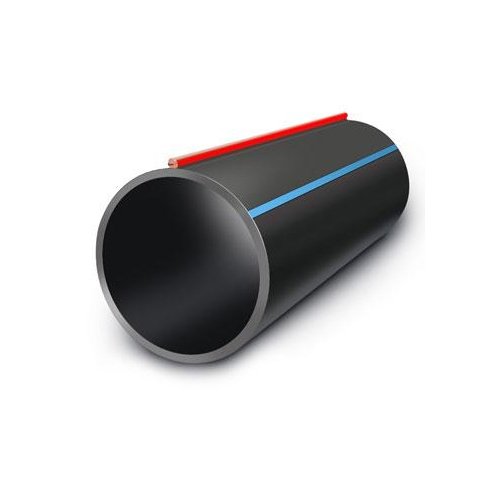
.jpg "HDPE Fittings")
HDPE Fittings Manufacturer in India
Looking for a reliable HDPE Fittings Manufacturer in India for water supply, irrigation, industrial piping, or infrastructure projects? Flow Well Profiles offers plastic piping solutions for commercial and industrial applications. HDPE fittings are essential components used to connect pipes, change pipeline direction, create branches, and connect pipelines to valves or other equipment.
Manufactured from high-density polyethylene, these components provide corrosion resistance, flexibility, and compatibility with suitable HDPE piping systems. Selecting the correct fitting according to pipe diameter, pressure rating, material grade, and connection method is essential for reliable pipeline performance.
Flow Well Profiles, based in Bhiwadi, Rajasthan, manufactures plastic piping products under the HYDRO FLOWWELL brand. Contractors, distributors, infrastructure developers, and industrial buyers can discuss their requirements to identify suitable fittings for their projects.
What Are HDPE Fittings?
HDPE fittings are components designed to join or connect HDPE pipes within a pipeline system. They help create secure connections, accommodate directional changes, divide flow between branches, and connect pipes to other system components.
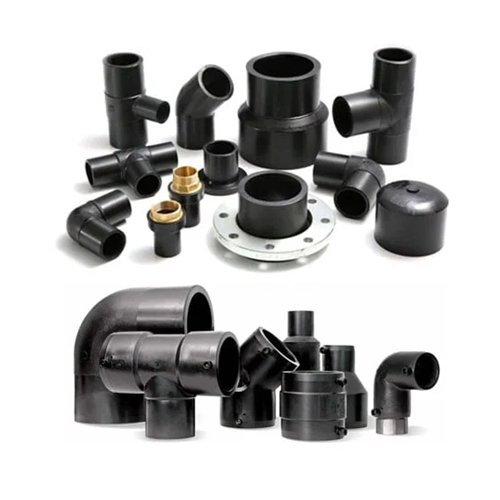
Common types include elbows, tees, reducers, end caps, couplers, flanges, and adaptors. Depending on the design and application, fittings may be connected through butt fusion, electrofusion, compression connections, or mechanical flanges.
The appropriate connection method depends on the fitting type, pipe dimensions, operating pressure, installation conditions, and project specifications. Correct selection and installation help maintain system integrity and minimise leakage risks.
Types of HDPE Fittings
1. HDPE Elbows
Elbows are used to change the direction of a pipeline. They are available in suitable angles and configurations according to the pipeline layout and installation requirements.
2. HDPE Tees
Tees create a branch connection from a main pipeline. They are commonly used in irrigation networks, water distribution systems, and industrial piping arrangements.
3. HDPE Reducers
Reducers connect pipes of different diameters. They help accommodate changes in pipeline size while supporting the flow requirements specified in the system design.
4. HDPE Couplers
Couplers connect compatible pipe sections. Depending on the product design, they may use fusion or another approved connection method.
5. HDPE End Caps
End caps close the end of a pipeline or an unused connection point. They are useful during pipeline construction, extensions, and system configuration.
6. HDPE Flanges and Adaptors
Flanges and adaptors connect HDPE pipelines to compatible valves, pumps, tanks, and other equipment. The connection must be selected according to the equipment interface and required pressure rating.
Key Benefits of HDPE Fittings
Corrosion Resistance
HDPE fittings do not rust like conventional metal components. This makes them suitable for many underground and water distribution applications when the material and operating conditions are appropriate.
Secure Connections
Compatible fusion fittings can create strong, continuous connections when installed by trained personnel using the correct equipment and procedures. Other fitting types require their specified installation methods.
Lightweight Construction
HDPE components are relatively lightweight, helping simplify transportation, handling, and installation at construction sites.
Chemical Resistance
Polyethylene offers resistance to many commonly encountered chemicals. Compatibility should be confirmed for the specific fluid, temperature, and operating conditions.
Flexible Pipeline Design
The availability of different fitting configurations helps contractors create branches, directional changes, and equipment connections according to the pipeline design.
Reduced Maintenance Requirements
Appropriately selected and installed HDPE fittings can provide dependable service in suitable applications. Correct installation, operating conditions, and periodic system inspections remain important.
Applications of HDPE Fittings
Water Supply and Distribution
HDPE fittings are used to connect pipes in municipal, residential, and commercial water distribution systems. Components must meet the required pressure and potable-water specifications where drinking water is involved.
Agricultural Irrigation
Irrigation systems use fittings to create branches, connect supply lines, change pipeline direction, and distribute water across agricultural land.
Industrial Piping
Industrial facilities may use suitable HDPE fittings for process water, wastewater, and compatible chemicals. Material compatibility and operating limits should be verified before selection.
Infrastructure and Construction
Infrastructure projects use fittings in underground utility networks, water management systems, and other civil engineering installations. Product dimensions and pressure ratings should match the approved project design.
Wastewater and Drainage
Appropriately specified HDPE components can be used in suitable wastewater and drainage systems. The selected product must meet the relevant fluid compatibility and operating requirements.
Why Choose Flow Well Profiles?
Flow Well Profiles has manufactured plastic piping products since 2003 at its facility in Bhiwadi, Rajasthan, under the HYDRO FLOWWELL brand.
When choosing an HDPE Fittings Manufacturer in India, buyers should assess manufacturing capabilities, dimensional consistency, quality-control processes, and the supplier's ability to meet project specifications.
Important considerations include:
- Manufacturing experience: Experience in plastic piping products for different applications.
- Product selection: Fitting configurations suited to different pipeline layouts.
- Quality control: Verification of relevant dimensions and product characteristics.
- Technical support: Assistance in identifying suitable fittings and connection methods.
- Commercial supply: Coordination for contractors, distributors, and bulk buyers.
Before purchasing, confirm the currently available fitting types, dimensions, pressure ratings, test documentation, and applicable certifications.
How to Select the Right HDPE Fittings
Selecting the right fitting helps maintain pipeline reliability. Consider these factors before ordering:
- Pipe diameter: Match the fitting size to the connecting pipes.
- Pressure rating: Ensure compatibility with the system's operating pressure.
- Material grade: Confirm that the fitting material meets the application requirements.
- Connection method: Select the appropriate fusion, compression, or mechanical connection.
- Fitting configuration: Choose the correct elbow, tee, reducer, coupler, flange, or adaptor.
- Fluid compatibility: Verify suitability for the transported fluid and operating temperature.
- Standards and documentation: Check the applicable Indian Standards and project specifications.
Correct installation is equally important. Fusion joints should be prepared and completed according to the manufacturer's procedures, while mechanical connections must be assembled to the specified requirements.
HDPE Fittings Price in India
The HDPE Fittings Price in India depends on fitting type, diameter, pressure rating, material grade, connection method, order quantity, and delivery location. Special configurations and project-specific requirements may also affect the quotation.
When comparing an HDPE Fittings Supplier in India, consider product specifications, quality documentation, connection compatibility, and overall suitability rather than selecting solely on price.
Contact Flow Well Profiles with your required fitting type, pipe diameter, pressure rating, quantity, and delivery location to discuss product availability and request a quotation.
HDPE Fittings Available Across Major Cities
Flowwell supplies HDPE fittings across multiple cities in India for water distribution, agricultural irrigation, industrial piping, and infrastructure projects. Suitable fittings help connect HDPE pipelines and support changes in direction, branching, and other connection requirements according to the piping system design. We serve customers looking for an HDPE Fittings Manufacturer in India and supplier in Ambala, Delhi, Gurugram, Faridabad, Noida, Ghaziabad, Jaipur, Lucknow, Kanpur, Varanasi, Agra, Meerut, Karnal, Panipat, Sonipat, Hisar, and Rohtak. Contact Flowwell to enquire about available fitting types, dimensions, compatibility, and supply for your project.
Frequently Asked Questions
1. What are HDPE fittings used for?
They are used to connect HDPE pipes, change pipeline direction, create branches, reduce pipe diameter, and connect pipelines to compatible equipment.
2. What types of HDPE fittings are available?
Common types include elbows, tees, reducers, couplers, end caps, flanges, and adaptors. Availability depends on the manufacturer's product range.
3. How are HDPE fittings connected to pipes?
Depending on the fitting design, connections may use butt fusion, electrofusion, compression fittings, or mechanical flanges.
4. What factors affect HDPE Fittings Price?
Pricing depends on fitting type, diameter, pressure rating, material grade, connection method, order quantity, and transportation costs.
5. Are HDPE fittings suitable for underground pipelines?
Yes, suitable fittings can be used in underground piping systems when their specifications, connection methods, and installation practices meet the project requirements.
6. How do I choose a reliable HDPE Fittings Manufacturer in India?
Review manufacturing experience, product specifications, quality-control procedures, relevant certifications, and the manufacturer's ability to meet your technical requirements.
7. Can HDPE fittings be used in agricultural irrigation?
Yes. Compatible HDPE fittings are commonly used to connect irrigation pipelines, create branches, and distribute water across agricultural fields.
8. How can I request a quotation for HDPE fittings?
Share your required fitting type, diameter, pressure rating, quantity, application, and delivery location with Flow Well Profiles to discuss availability and pricing.
HDPE Fittings in Ambala
HDPE Fittings in Faridabad
HDPE Fittings in Gurugram
HDPE Fittings in Hisar
HDPE Fittings in Jhajjar
HDPE Fittings in Mewat
HDPE Fittings in Palwal
HDPE Fittings in Panchkula
HDPE Fittings in Panipat
HDPE Fittings in Rewari
HDPE Fittings in Rohtak
HDPE Fittings in Sonipat
HDPE Fittings in Delhi
HDPE Fittings in Agra
HDPE Fittings in Aligarh
HDPE Fittings in Prayagraj
HDPE Fittings in Azamgarh
HDPE Fittings in Bahraich
HDPE Fittings in Ballia
HDPE Fittings in Balrampur
HDPE Fittings in Basti
HDPE Fittings in Chandauli
HDPE Fittings in Etawah
HDPE Fittings in Ayodhya
HDPE Fittings in Noida
HDPE Fittings in Ghaziabad
HDPE Fittings in Gorakhpur
HDPE Fittings in Hardoi
HDPE Fittings in Jaunpur
HDPE Fittings in Kanpur
HDPE Fittings in Lucknow
HDPE Fittings in Varanasi
HDPE Fittings in Dehradun
HDPE Fittings in Haridwar
HDPE Fittings in Ajmer
HDPE Fittings in Alwar
HDPE Fittings in Bhiwadi
HDPE Fittings in Bharatpur
HDPE Fittings in Bikaner
HDPE Fittings in Ganganagar
HDPE Fittings in Jaipur
HDPE Fittings in Kota
HDPE Fittings in Jammu
HDPE Fittings in Samba
HDPE Fittings in Srinagar